
Empire State University Participates in Student Basic Needs National Study
Empire State University has been selected as one of 15 U.S. universities participating in Ithaka S+R’s research study on the basic needs of students in higher education. “When we talk about basic needs, we’re usually talking about those foundational things that are going to be really hard for you to think about your educational goals if they’re not in place,” says Anna Zoodsma, basic needs coordinator at Empire State University’s Office of Health and Wellness. Once the project concludes, the findings collected from participating institutions will serve to streamline basic needs access for university students across the country, removing barriers to degree completion.
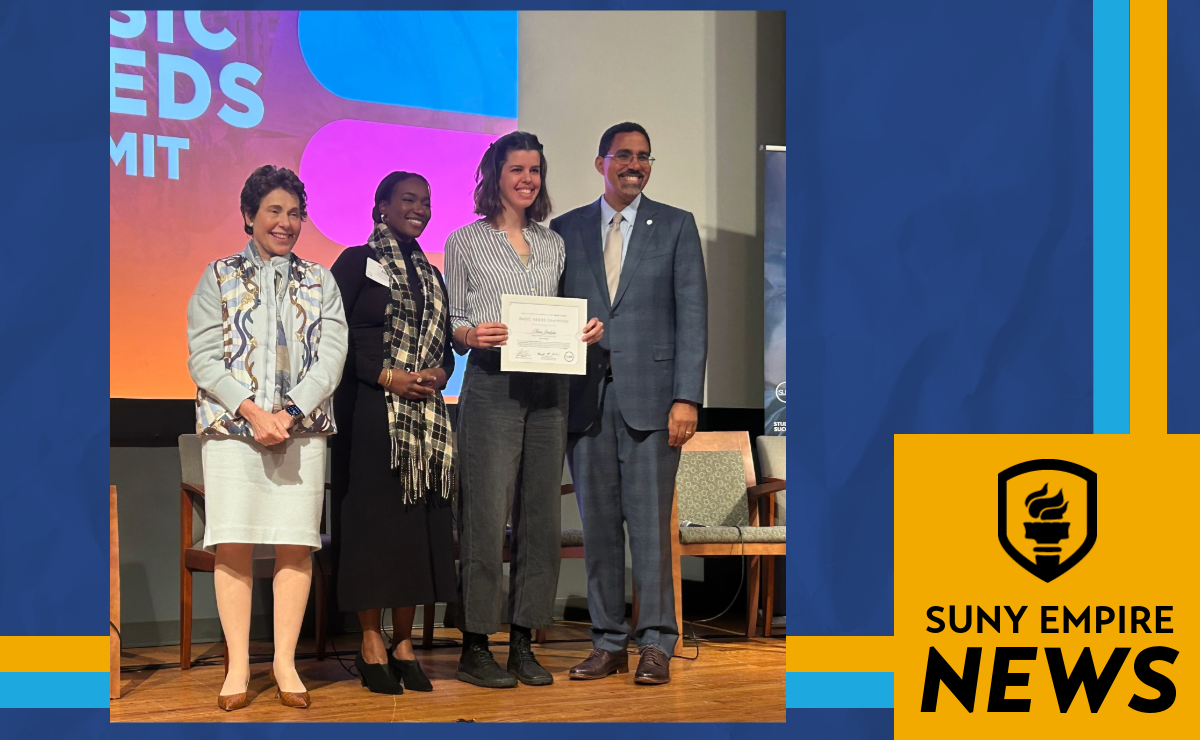
Ithaka S+R is a nonprofit organization dedicated to improving access to education and knowledge, much in line with SUNY Empire’s own access mission. Zoodsma says “it’s kind of a two-way street.” In exchange for contributing to the organization’s national findings, SUNY Empire will receive “a personalized report that we can use to help improve our basic needs, health, and wellness services,” shares Zoodsma, who recently received the recognition of basic needs champion at the SUNY Basic Needs Summit.
SUNY Empire was accepted to the project in spring 2026, with student research beginning this fall. The first phase of the study consists of interviews and focus groups with a randomly selected pool of 100 students across all participating schools. The second phase, which is planned for 2027, will consist of a survey open to all undergraduates. Student participation is entirely optional throughout the project.
Zoodsma pinpoints the importance of gathering this data: “We have a lot of research [about basic needs], but not all of it comes from a student voice. We might be able to say we have all these resources available for students, but do students know about them? Do they feel comfortable reaching out?” The study shifts the focus away from reporting on what resources universities are offering, and towards how students are understanding and using that support.
Housing, food, transportation, healthcare, and family care are some of the basic needs areas that students struggle with. The university has designed services that respond to these needs, such as the virtual food pantry, an emergency grant program, and the Student Chromebook Initiative, which offers new students Chromebook laptops at a discounted rate. Additionally, a partnership with TimelyCare provides online mental health services at no cost to students—without needing health insurance—and a library textbook partnership removes obstacles to learning. Zoodsma also highlights Single Stop Benefits Screener, a service through which Empire students can easily check their eligibility for assistance programs at no cost. “We’re always trying to be as creative and streamlined as we can be to account for the fact that our students are everywhere and might have different things in their communities,” she explains.
Transportation and childcare are two reoccurring challenges that Zoodsma has heard Empire students talk about and are on the departmental radar. The basic needs coordinator shares that the office hopes to expand their emergency grant funding “because we know sometimes larger life things happen,” and bring back a committee focused on supplemental nutrition assistance program (SNAP).
As for Ithaka S+R’s study to examine basic needs insecurity among university students, “It’s years in the making, and at the conclusion, there might be some really interesting findings and chances to apply what we learned,” says Zoodsma.